Cairn
You are stacking a cairn, and the only tool you have is your own feet.
Three rules
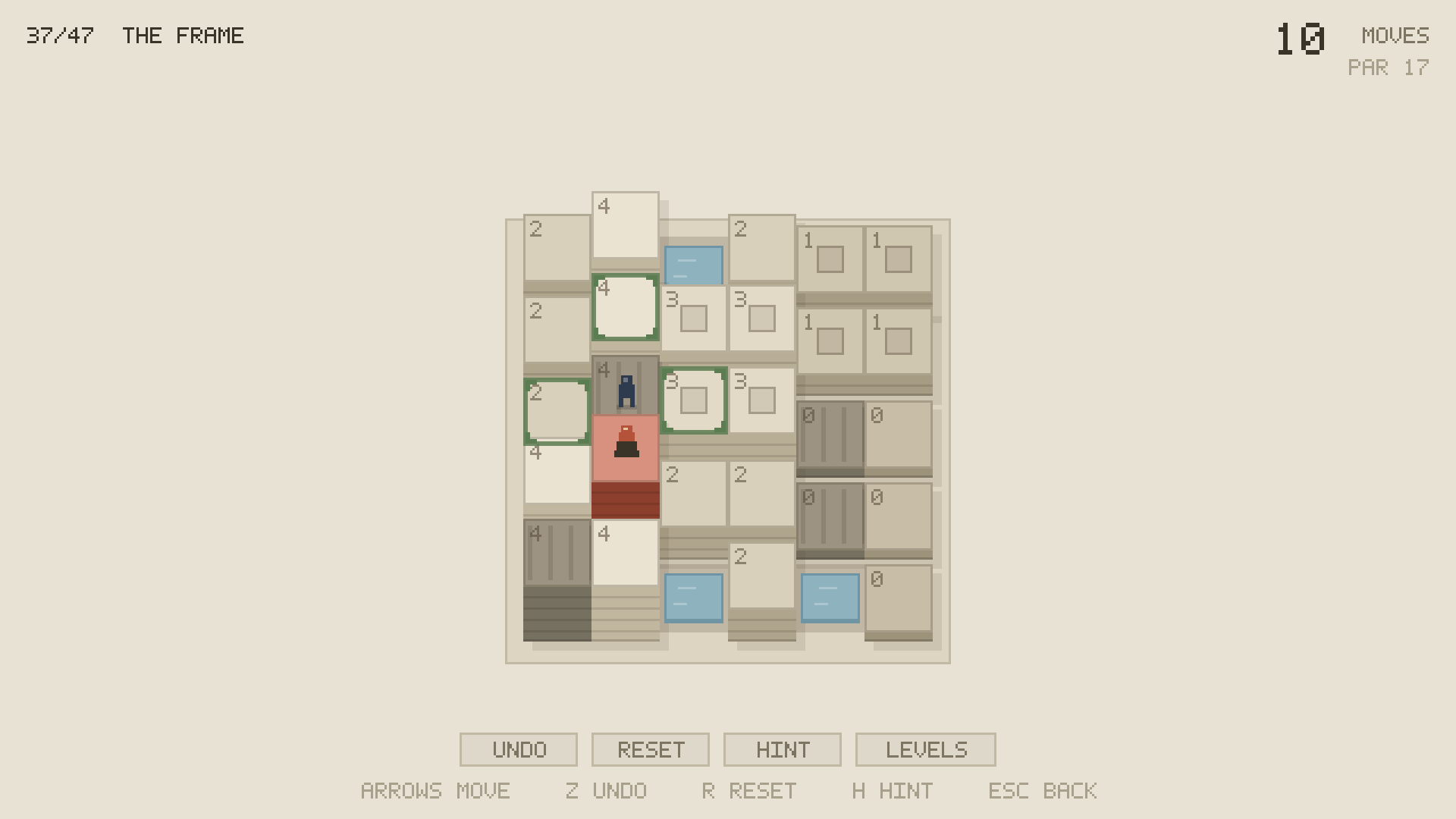
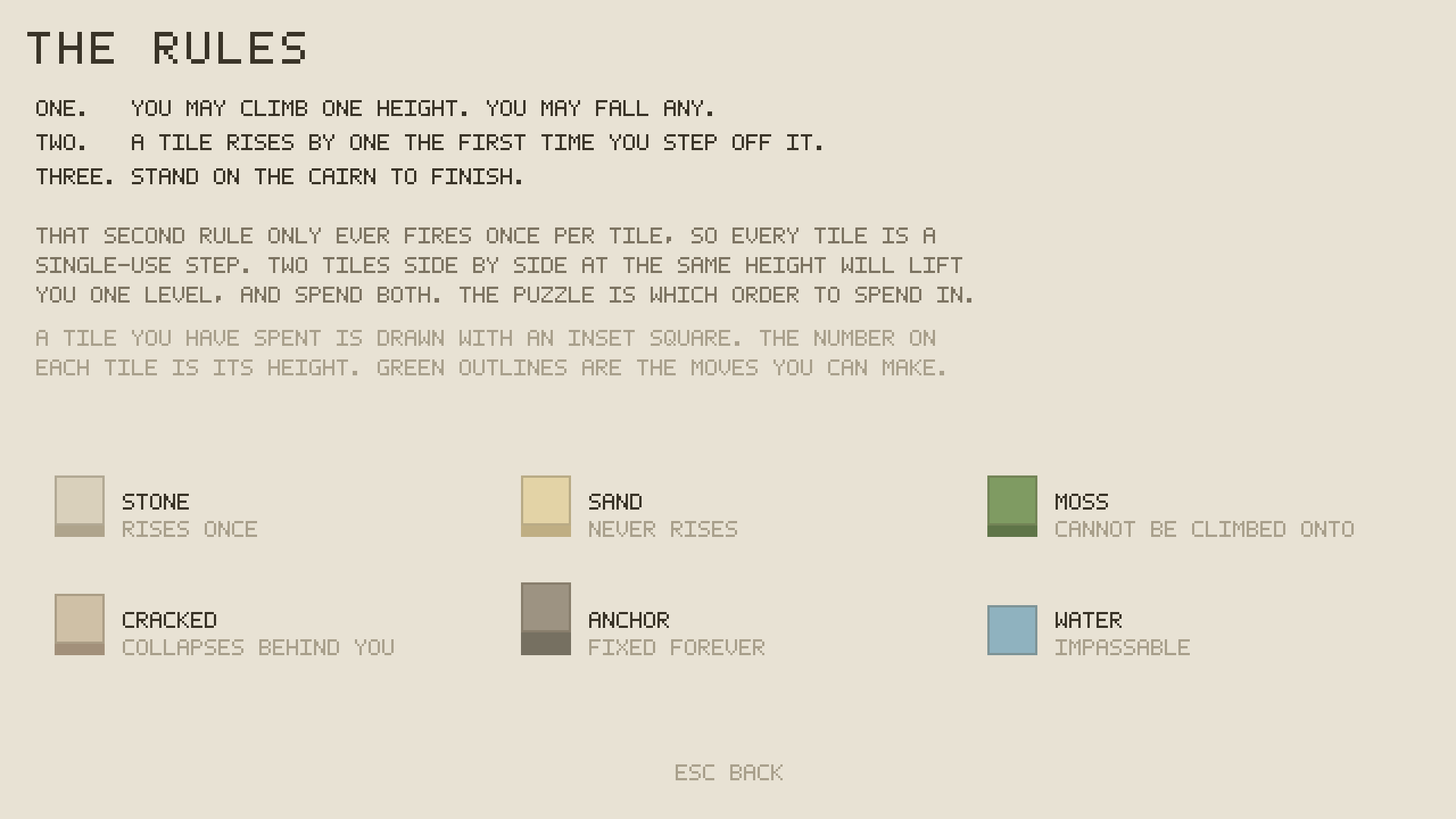
- You may climb one height. You may fall any.
- A tile rises by one the first time you step off it — once, ever.
- Stand on the cairn to finish.
That "once" is the whole game. Two tiles side by side at the same height will lift you one level, and spend both. So every tile on the board is a single-use step, and the puzzle is never where to go — it is which order to spend the ground in.
Your own footprints build the staircase. They also wall you in behind you.
What is in it
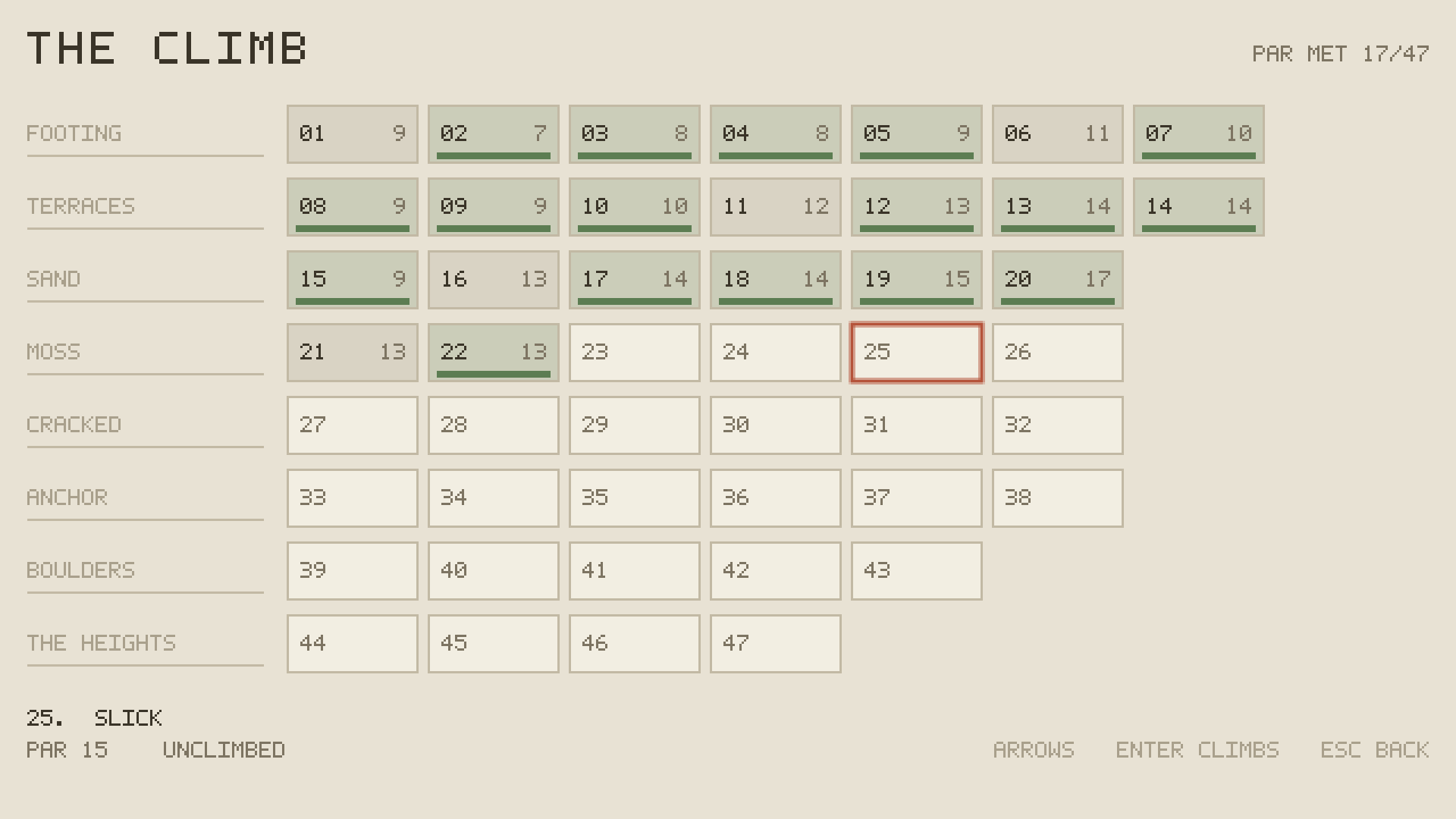
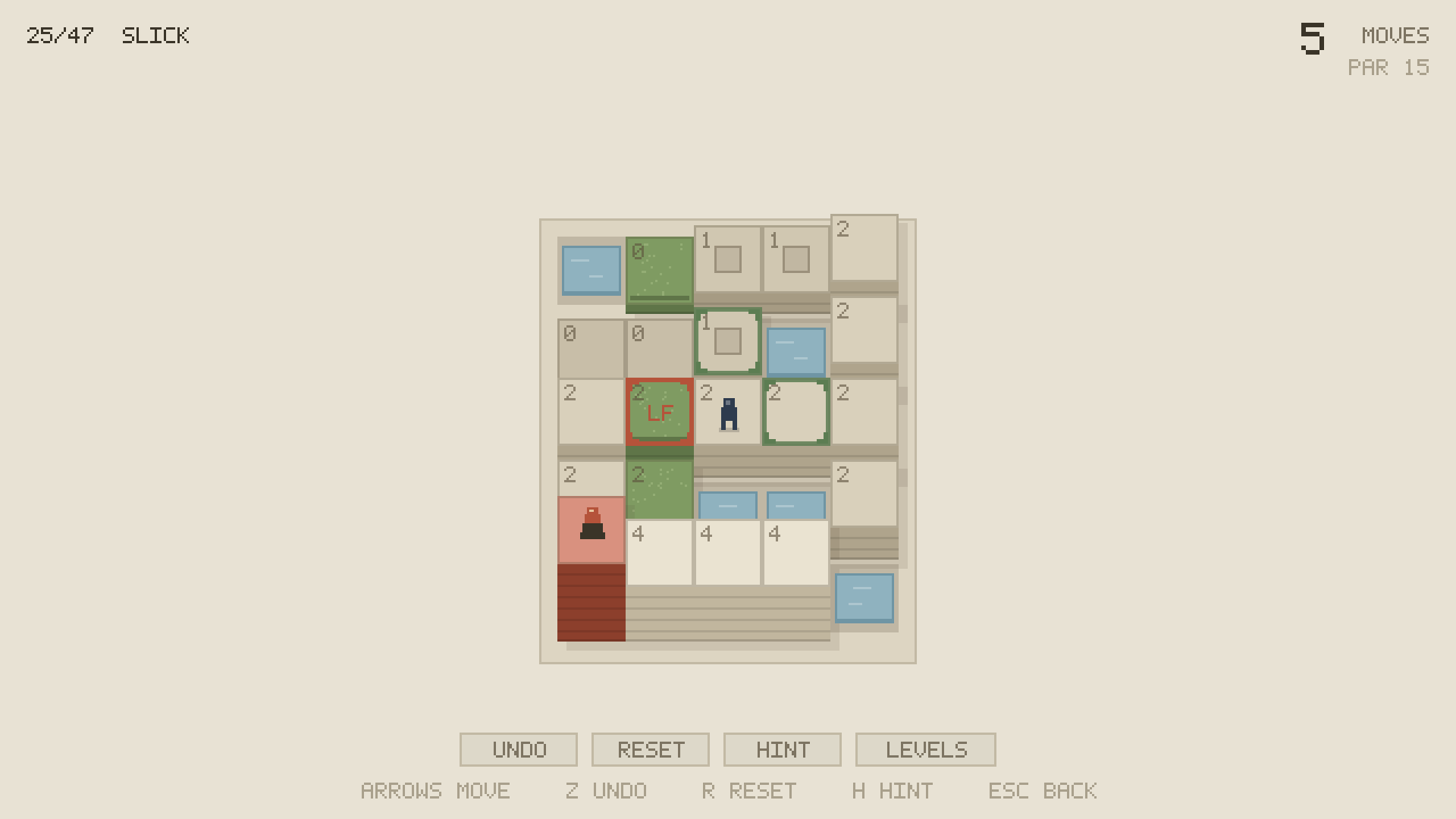
- 47 hand-curated levels across eight tiers, each introducing one idea: sand that never rises, moss that refuses to be climbed onto, cracked stone that collapses the moment you leave it, anchors that never move, boulders that shove.
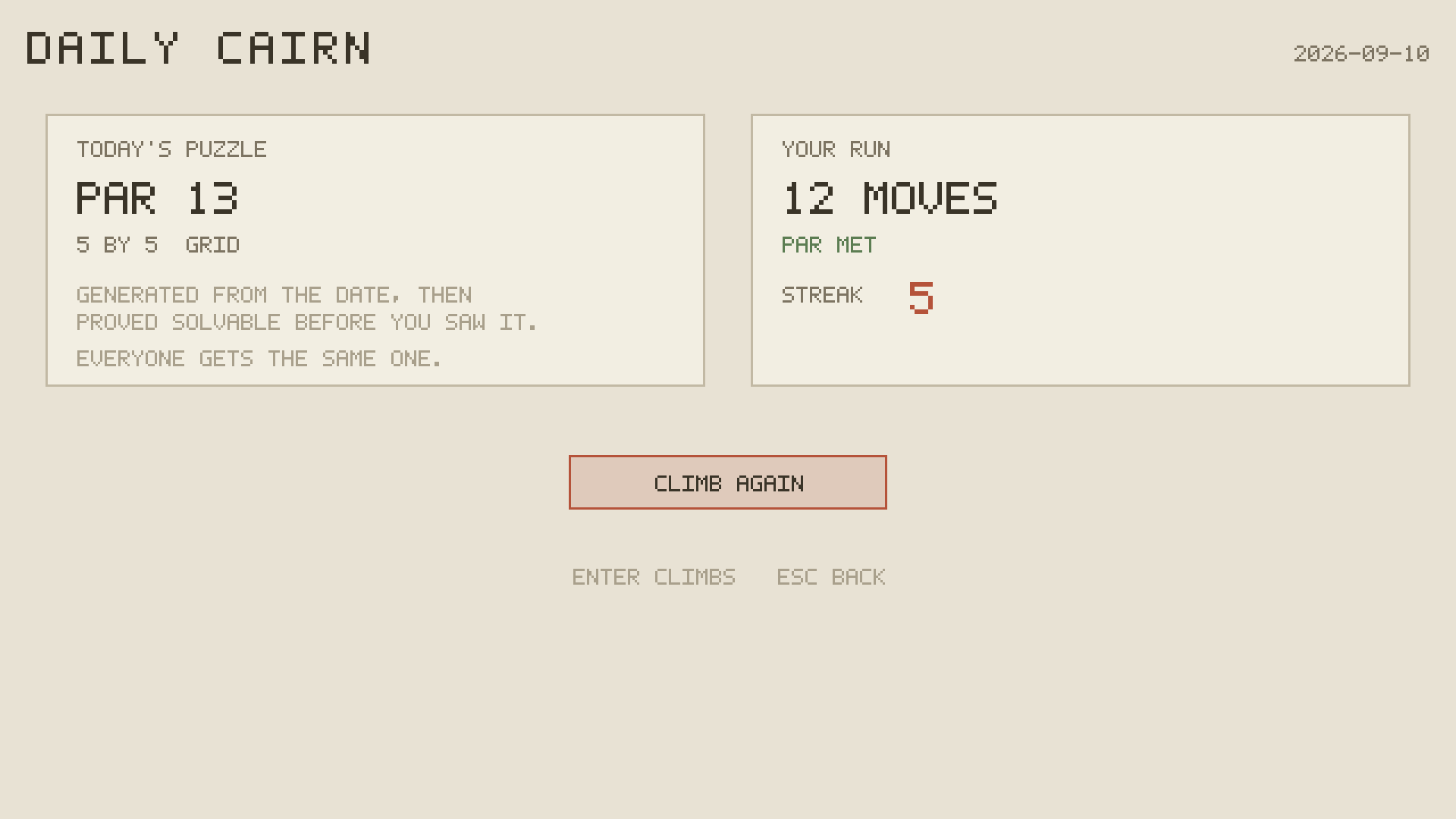
- A daily cairn, generated from the date and the same for everyone.
- Undo, reset, and a hint that gives you the genuinely optimal next move.
Every par is a proven optimum
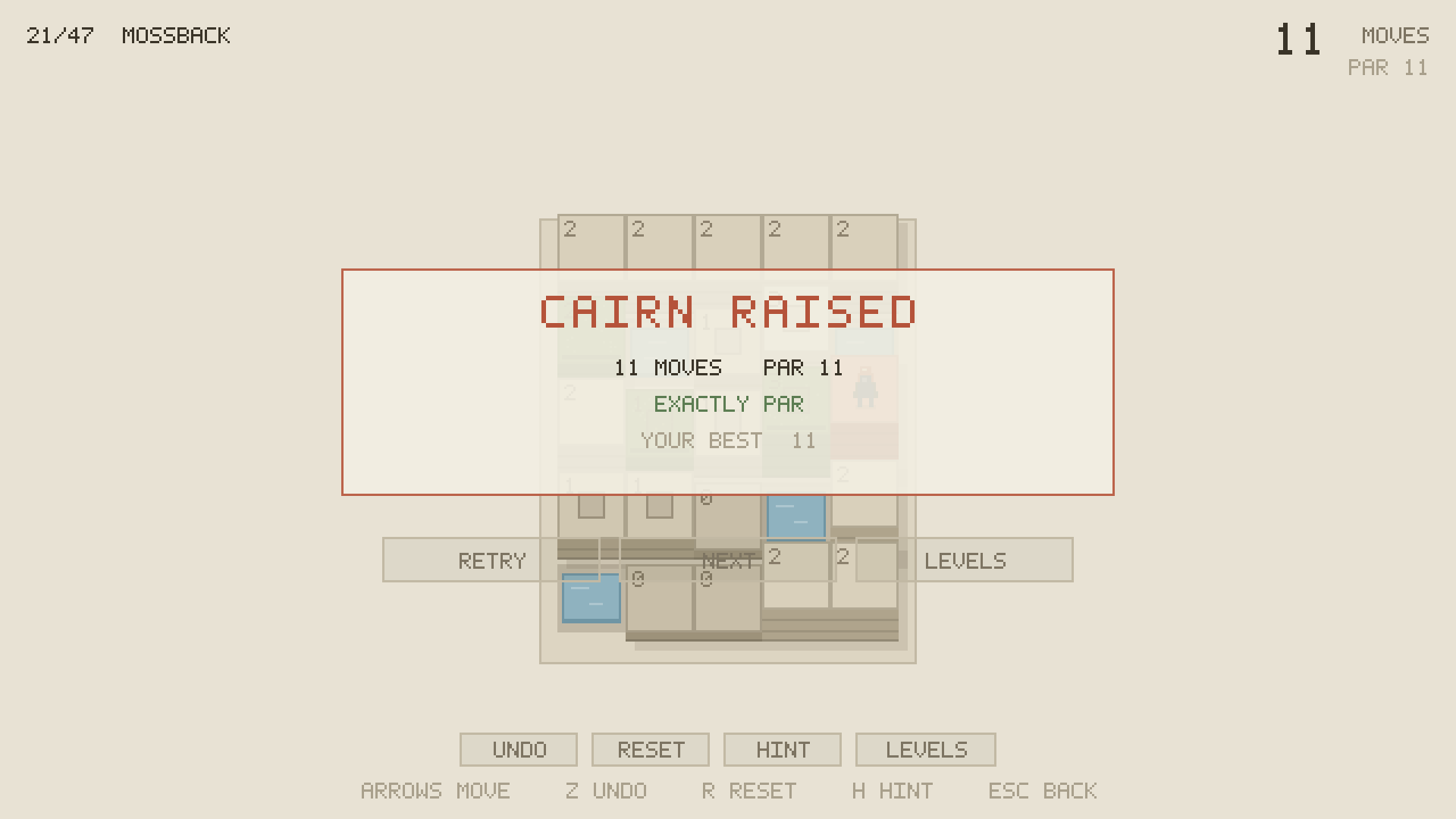
Not a designer's guess at a good score. Before this shipped, every level was solved exhaustively by a search over its entire reachable state space, and par is the shortest solution that exists. If the board says par 14, then 13 is impossible.
The same solver does something more useful while you play. Because tiles are single-use, you can spend the one tile you needed and strand yourself. The game tells you when that has happened — no longer solvable — so you undo instead of wandering for another ten moves. That warning is a proof, not a hunch, and in testing it never once cried wolf.
The solver also shaped the design. The first version of rule two was "every tile you step off rises", with no limit, and the solver immediately showed the optimal play was to oscillate between two tiles ratcheting them upward forever. A grind, not a puzzle. Making the rise happen once killed that dead and turned the whole game into routing.
Controls
- Move — arrow keys or WASD
- Undo — Z Reset — R Hint — H Mute — M
Swipe to move on touch. Works in landscape on a phone.
How it is built
One HTML file. No engine, no asset packs, no network calls. The stone is drawn as stacked blocks with side faces so height reads without being decoded, the font is a 5×7 bitmap drawn glyph by glyph, and every sound is synthesised in the browser — a tile that rises plays a pitch tied to its new height, so building a staircase plays a scale.
It was built with the help of an AI assistant (Claude), which wrote the code, the solver, the level curation and the sound synthesis. Directed and tested by a human.
Free. The tip jar is right there if it earned one.
Development log
- The solver broke the game before I built it4 days ago
Leave a comment
Log in with itch.io to leave a comment.